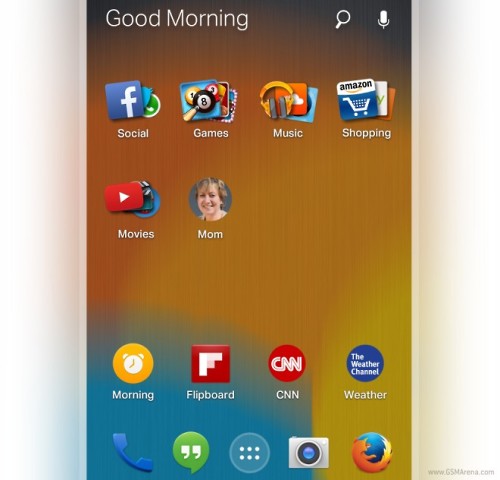
Today Mozilla unveiled its new launcher aimed at helping you find new apps, as well as those you may have downloaded but forgotten about.
Aptly named Firefox Launcher after the company’s popular web browser, the new homescreen replacement designed in conjunction with contextual computing startup EverythingMe highlights apps you may want based on your usage. Read more »
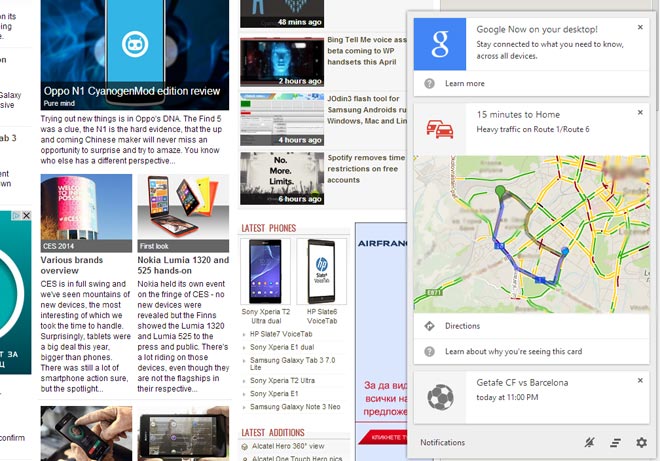
Google Now has finally made its way onto Chrome Canary, which is Chrome’s beta channel. The feature has been in the works since March last year and now its ready to be widely tested by Canary users.
The feature is available in version 34.0.1788.0 of Canary for Windows and Mac. After enabling it, you’ll see a Chrome notification icon in the status bar – clicking it pops up your Google Now cards. Naturally, you’ll have to be logged in your Google account in order to get it to work. Read more »
Google will be updating its Chrome browser for iOS devices. The latest iteration of the browser will bring a few new features: Safe Browsing, data compression, and auto-translation.
Here’s a snippet straight from big G about the new data compression feature: Read more »
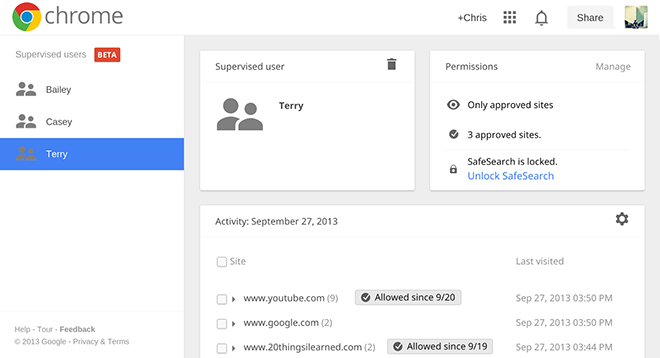
Google has released a new version of Chrome (32.0.1700.76) for Windows, OS X and Linux that brings with it some useful new features, such as showing activity of multimedia status on tabs, supervised users and special mode for Windows 8.1.
We often have dozens of tabs open on your browser and then one of them starts playing a sound and we have no idea which one is responsible for it. With the latest update, Chrome will now show a speaker icon on any tab that is currently playing a sound, so you know where to go to mute that annoying sound. It will also show a red dot if a tab is using your webcam and a blue rectangle if a tab is casting to your TV connected to a Chromecast. Read more »
According to the latest browser usage data from NetApplications, Internet Explorer 11 has tripled its market share from 3.27% to 10.42%. This brings the total Internet Explorer market share to 57.91%, which is 0.45 percentage points less than what it was in the month of November.
Internet Explorer 11′s growth is at the cost of IE 10 and IE9′s and the fact that IE10 introduced automatic updates. As a result, Internet Explorer’s usage is down by 6.45 percentage points to 11.05%. Read more »
Yesterday Mozilla launched Firefox 26 for Android bringing the now stable features of the previous Beta release of the popular browser.
Some of the main features in the latest build of the mobile browser include a revamped about:home page with a streamlined view of the Top Sites list. Users can now also pin their favorite sites to the start screen as well. Read more »
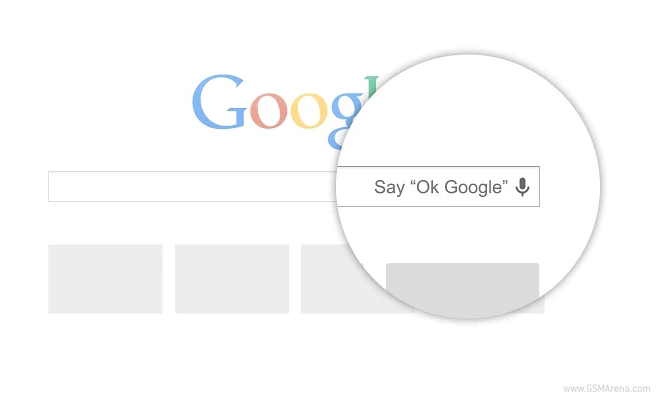
Google has released a new extension for Chrome that will allow you to do searches within the browser using just your voice. Although voice search option has been available in Chrome for a while now, it required manually clicking on a button to activate it.
Now, using this extension, you can just say “Ok, Google” and the browser will automatically go into voice search mode, after which you can speak the rest of your query. This feature works as long as you are on the Google homepage or on a new Tab page. Read more »
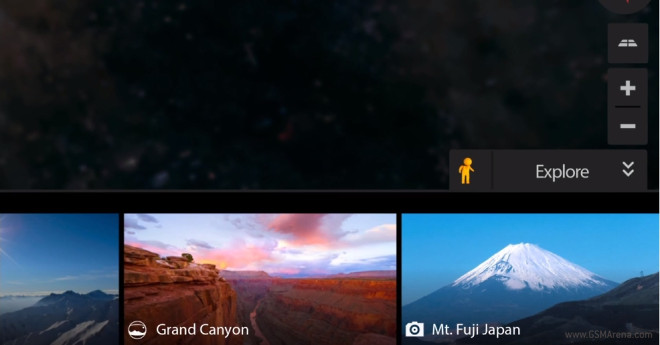
You may have noticed that after the latest major Google Maps update for desktop browsers, an important figure suddenly went missing: Pegman. This move made many users frustrated by their inability to quickly access Street View and nearby images by dragging the icon onto the map, and more than a few people opted to continue using Google Maps’ classic view.
Now, the latest update brings back Pegman, and makes viewing images, panoramas, and even indoor areas even easier by having all of them appear on the map whenever you grab hold of Pegman. Read more »
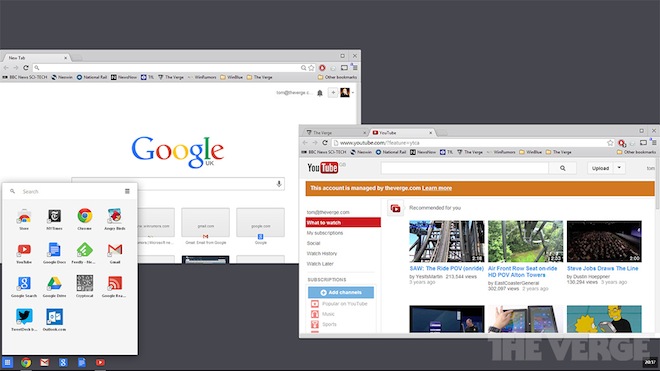
The current stable version of Google Chrome has two modes under Windows 8. On the desktop mode, it runs the same way it does on Windows 8. In the new Modern UI, it is again basically the same app, but running in a permanent fullscreen mode instead.
Google has been playing around a bit with the browser and how it works under this mode in Windows 8 and you can see that in the latest developer build. The latest update essentially turns Chrome into Chrome OS that runs within Windows 8, complete with a new UI and its own app drawer. Read more »
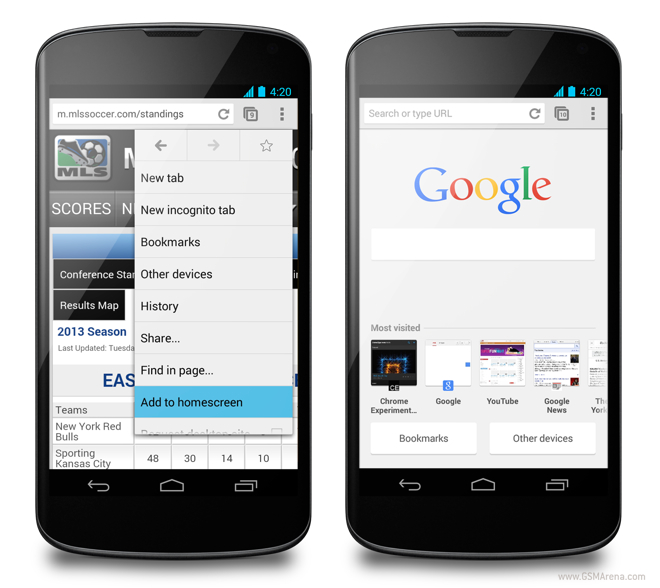
Google has updated the beta version of the Chrome for Android browser and added two new features to the mix. The first one is the ability to save any web page as a shortcut on the homescreen.
What this feature does is lets you have a shortcut to any webpage on your homescreen so you can quickly launch it in Chrome without having to open the browser first. This feature has been available on the stock Android browser but is now available to those devices that don’t have the stock Android browser, such as the Nexus and Google Play edition devices. Read more »
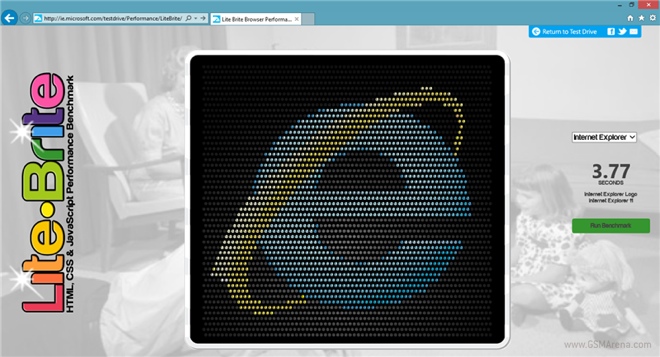
We got a first glimpse of IE11 when Microsoft released the preview of the Windows 8.1 update. Now, Microsoft has released a developer preview of the upcoming browser for Windows 7 users as well.
IE11 aims to improve the performance and security of your existing IE10 browser. New features like ability to render web images as well as text using the GPU, support for W3C resource priorities, SPDY network protocol and an updated JavaScript engine improves page loading performance over its predecessors as well as its rivals. In SunSpider benchmark, IE11 Developer Preview was 4 percent faster than IE10 and nearly 30 percent faster than Chrome 28. Read more »
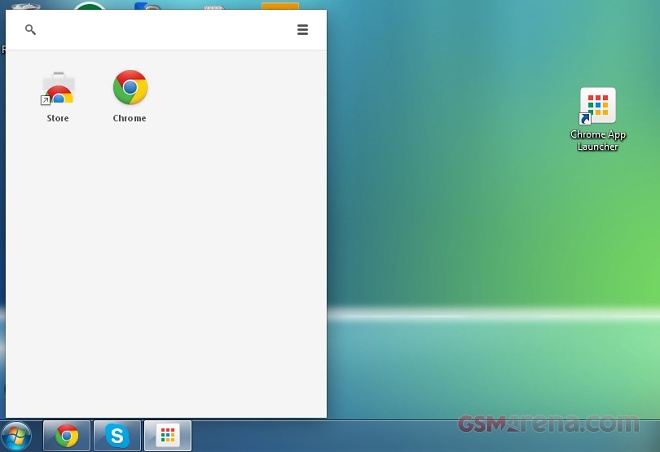
It looks like the Google Chrome App launcher is finally out of its developers preview mode, as the app is now available for all Windows users.
The Google Chrome App launcher will place an app on the start page, taskbar and desktop for Windows 8 and in menu bar for Windows 7, which allows you to quickly access the browser, Chrome store, Gmail or any other application that works with the Google’s browser. Read more »
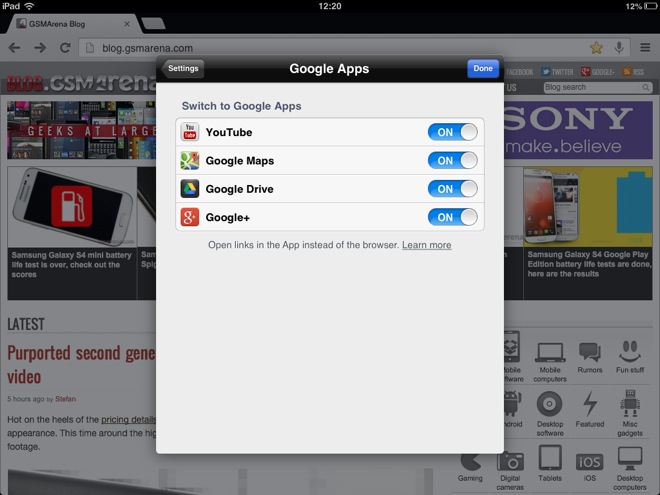
Google has released an update for the Chrome browser on iOS, which introduces interoperability with other Google apps installed on your device. Now, you can choose to open links in YouTube, Maps, Google+ and Drive applications. So, for example, you click on a location, you can now open it in the Maps app instead of within the browser.
Other changes include improvements to voice search, fullscreen mode on iPad, access to browser history (which was shockingly absent until now) and a new data saving mode, which compresses pages to reduce bandwidth usage and page load times. Read more »
Google has updated the Android version of the Chrome browser with some useful new features. Chrome now has a fullscreen mode on tablets, which means the toolbar on top hides when you scroll down, a feature that was present on smartphones before and is now on tablets as well.
Another useful addition is the translate feature that was present on the desktop version of Chrome. Now if you open a page that is in a different language from your system language, the browser will offer to translate it for you. Read more »
According to a research conducted by StatCounter, Samsung smartphones have overtaken Apple iPhones and iPod Touches in web browsing for June and now account for 25.5% of worldwide pageviews. Apple is still close behind at 25.1%, though.
The analyst company puts Nokia in third place with a 22% share. StatCounter has been monitoring web usage of smartphone brands across a network of 3 million websites to compile the report. Read more »




 Xiaomi Mi 4i battery life test
 HTC One E9+ performance benchmarks
 HTC One M9+ preview
 Lenovo A7000 Preview
 Oppo R7 battery life test