The LG G Flex2 will be staying under the spotlight for a while as it is not only a curved smartphone with self-healing coating on its back, but it is also the first device to utilize the new Snapdragon 810 chip. Performance aside, what this blogpost is all about, is its battery life.
The G Flex2 is powered by a non-removable 3,000 mAh battery, which is about 15% less than its predecessor. The Snapdragon 810 chipset supports fast charging by default and the provided charger can replenish 60% of the Flex2′s battery in half an hour. Read more »
Motorola has already updated its Moto X 2nd Gen (2014) with the latest Android Lollipop build and we’ve decided to run our battery life tests again. Lollipop brings a number of improvements including a number of battery optimizations combined under what’s known as Project Volta.
We’ve already detailed Volta’s features and you can read more about them right here.
In our previous tests with phones that recently got updated to Lollipop we weren’t able to determine a specific pattern in the change in battery life – some of the phones did better in talk time or web browsing, some did worse. It seems every device behaves differently under Lollipop OS, so we really had no clue what to expect from the updated Moto X 2nd Gen. Read more »
Previously we explored how the jump from Android 4.4 KitKat to 5.0 Lollipop had affected several flagships in terms of performance, now it’s time to have a look at what it does to battery life. For this test we’ll be using the Samsung Galaxy S5 (Snapdragon 801 version), LG G3 (2GB RAM, 16GB storage), HTC One (M8) and the Nexus 5.
All four were recently updated to Lollipop and the new major version of the mobile OS promises additional battery savings through clever optimizations. Read more »
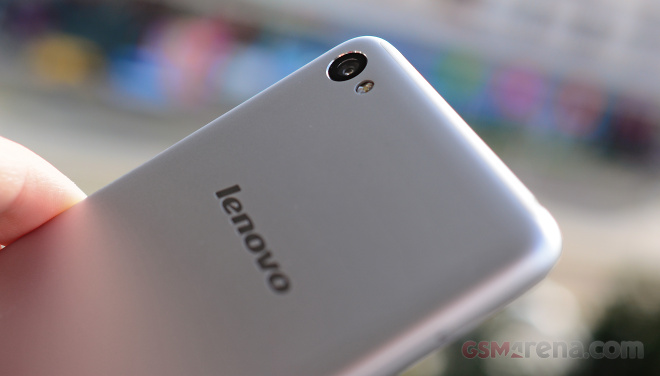
After getting the review treatment the Lenovo S90 Sisley is now entering our detailed battery life test overview so that we can compare it to some of its rivals and see what’s what.
We liked a lot about the Sisley in our review like the great design, the good Super AMOLED panel, capable Vibe UI v.2 software and the camera among other things but the battery life was only average. Read more »
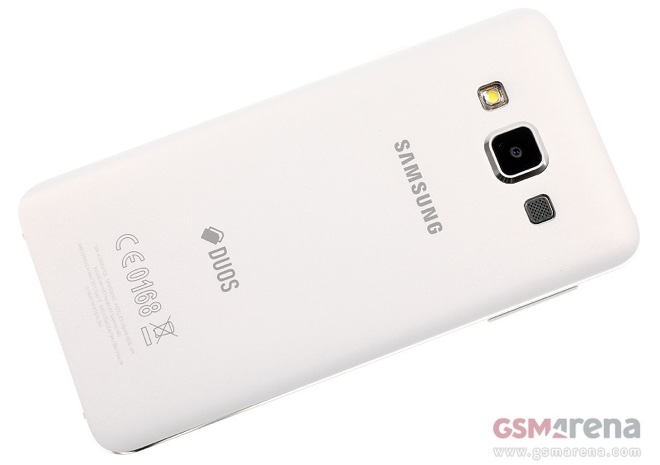
Both phones provide equal browsing, calling and video playback times as those tests don’t care for the dual-SIM functionality and are not affected by it and it’s stand-by where the two part ways. Read more »
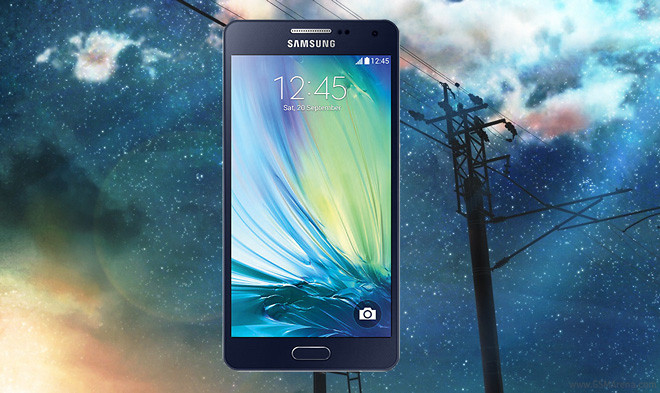
The Samsung Galaxy A3 passed our review gauntlet with ease and now its time to take a closer look at the phone’s battery life performance. This is one of the thinnest Android smartphones the company has ever made, so the battery isn’t really huge – 1,900mAh.
However, the phone doesn’t sport battery hungry specifications either. We have a 4.5″ Super AMOLED qHD display and a Snapdragon 410 chipset with a quad-core Cortex-A53 CPU. It all sounds like a classic recipe for a solid battery life, so let’s dig right in and see if this is the case. Read more »
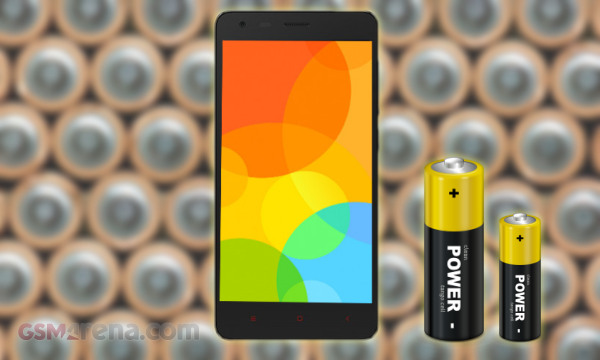
Xiaomi Redmi 2 stopped by recently and we did what as we always do – a thorough hardware and software inspection for our traditional in-depth review. The Redmi 2, unlike its Redmi 1S predecessor, is a dual-SIM device with LTE connectivity, courtesy of the Snapdragon 410 chip inside the newcomer.
The Redmi 2 battery has 10% higher capacity, while the display and overall performance have been kept the same. We are eager to check how the new hardware and MIUI v.6 are doing with the 2,200 mAh battery unit. Read more »
YotaPhone 2 is an innovative smartphone with two displays – a regular 5″ AMOLED screen at the front and a 4.7″ electronic-paper display over at the back. It uses a Snapdragon 801 chip and offers a quite capable 8MP snapper.
We’ve already met the YotaPhone 2 and we confirmed it is indeed a very interesting and unique flagship phone, which can be used and operated in lots of different ways. Saving battery has never been so easy thanks to the rear display and the dedicated monochrome widgets and apps. You can mirror the entire Android OS at the back, but this reduces the e-paper display lifespan and doesn’t saves that much energy. Read more »
Sony Xperia C3 Dual stopped by our office recently and we did a thorough inspection as usual. The 5.5″ phablet runs on the dated Snapdragon 400, but offers some great features as selfie-centric front snapper with a LED flash, a rear 8MP camera, plus dual-SIM or LTE connectivity.
We’ve reviewed quite a few mid-range Xperia smartphones and most of them did great on our battery life test, so we had some high hopes for the Xperia C3 and its 2,500 mAh battery unit. Our review is live at our homepage, so it’s time we put our detailed battery life breakdown out there. Read more »
Oppo N3 is surely a very interesting smartphone with motorized 206-degree rotating camera, a worthy successor of the Oppo N1 cameraphone. The N3 isn’t all about its camera, though, as it is also a real beast when it comes to features and performance.
Our review is welcoming readers at our homepage, and today we are ready to share with you our complete battery life impressions. Note that the Oppo N3 is in fact a dual-SIM capable smartphone, so we’ve naturally put its battery in charge of two SIM standbys and here comes our findings. Read more »
Until recently one of the thinnest smartphones in the world, now only second-best actually, the Oppo R5 made it through our review routine and our findings are live at our homepage.
The impressively thin Oppo R5 packs a 5.2” AMOLED screen of 1080p resolution and runs on the Snapdragon 615 chipset with an octa-core Cortex-A53 processor. This great hardware package is powered by a 2,000 mAh battery – a relatively small capacity for such a demanding smartphone. Let’s find out how the Oppo R5 did at our battery torture test, shall we? Read more »
The Microsoft Lumia 535 Dual SIM offers big screen estate and dual-SIM option on a budget price, something many Windows Phone fans will appreciate. The Snapdragon 200 chip isn’t among the popular choices nowadays and even though its uninspiring GPU performance, we are eager to see how it will affect the battery life performance.
Naturally, now that the Lumia 535 review is pinned on our homepage, we are ready to post our complete battery life test breakdown. Shall we? Read more »
One of the thinnest smartphones around, the Gionee Elife S5.1, has just made it through our review routine and you can find out what happened in our in-depth article.
The Gionee Elife S5.1 uses a 4.8″ Super AMOLED screen and runs on the MT6592 chip with an octa-core Cortex-A7 processor. We’ve seen this platform perform rather poorly, when it comes to battery endurance, so we didn’t expect anything impressive from the Elife S5.1 but we surely had our eyes open for potential surprises. Read more »
The top-shelf internals of the Motorola Nexus 6 are powered by a beefy 3,220mAh battery. As the first handset to run Android 5.0 Lollipop, we were really curious to put the Pure Google phablet through the paces out battery test.
Curiously, the Nexus 6 features the exact same size battery as its main Android rival, Samsung Galaxy Note 4. Read on to find out how the newcomer’s battery performance stacks up against the Korean offering! Read more »
The Lenovo Vibe Z2 Pro is the company’s 2014 flagship and it sports a sizable 6″ display with a QHD resolution in a very sleek and compact body. A phone this large also makes room for a large battery, and the Vibe Z2 Pro comes with a 4,000mAh juice pack.
In theory, this should give it serious power autonomy but a big battery can only get you so far. The phone’s internals include a Snapdragon 801 chipset with a quad-core 2.5GHz Krait 400 CPU and 3GB of RAM, which is no longer the latest, but still pretty good in terms of efficiency. Read more »








 Benchmarking Asus ZenFone 2 ZE551ML with Intel Atom Z3580 SoC and 4GB of RAM
 HTC One E9+ performance benchmarks
 Samsung Galaxy S6 updated to Android 5.1.1: exploring the differences on video
 Oppo R7 battery life test
 Hot or Not: Android M, iOS 9 and Watch OS 2.0